Why Balance Declines After 60 🦵
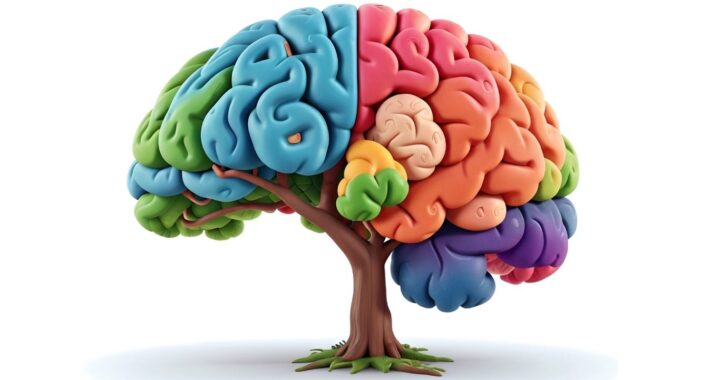
Balance is much more complex than most people realize.
It is not controlled by one single body part. Instead, balance depends on three major systems working together continuously.
1. The Feet and Ankles
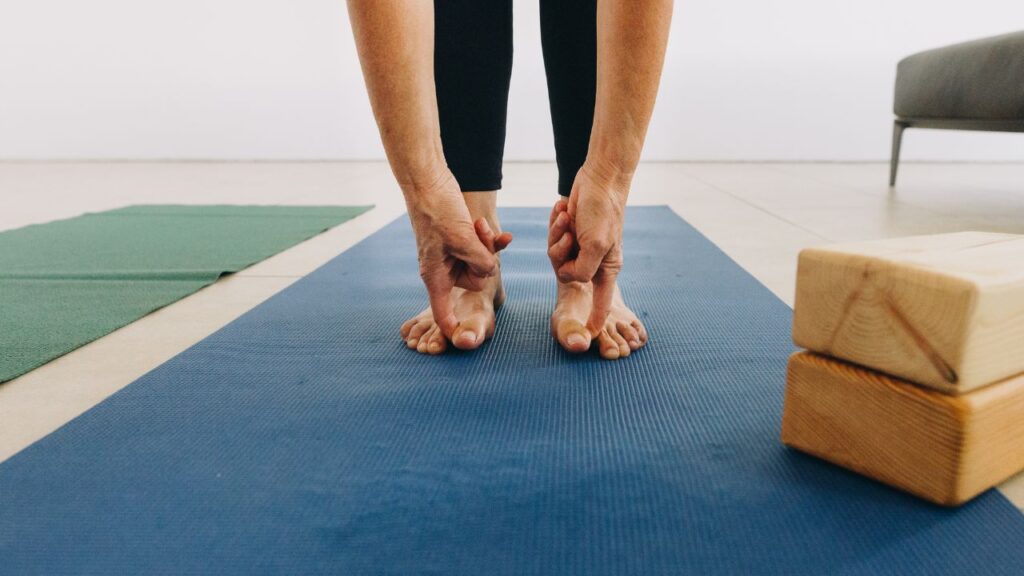
Tiny nerve endings in your feet constantly send signals to the brain about:
- Ground position
- Weight distribution
- Movement changes
These signals help your body stay upright automatically.
2. The Inner Ear
The inner ear contains the vestibular system, which helps detect:
- Head movement
- Direction changes
- Spatial orientation
This system acts like your body’s internal GPS.
3. Vision
Your eyes help the brain understand your surroundings and maintain orientation in space.
When these three systems communicate properly, movement feels smooth and stable.
However, after age sixty, all three systems naturally begin slowing down.
Common Age-Related Changes Include:
- Reduced nerve sensitivity in the feet
- Slower muscle reactions
- Weaker leg strength
- Decreased flexibility
- Poor posture
- Slower balance corrections
The muscles responsible for preventing falls — especially fast-twitch muscle fibers — become weaker over time.
These fibers are crucial because they help the body react quickly during slips or sudden movements.
The encouraging news is that these systems respond extremely well to training and movement.
The Importance of Daily Movement for Seniors 🚶♂️
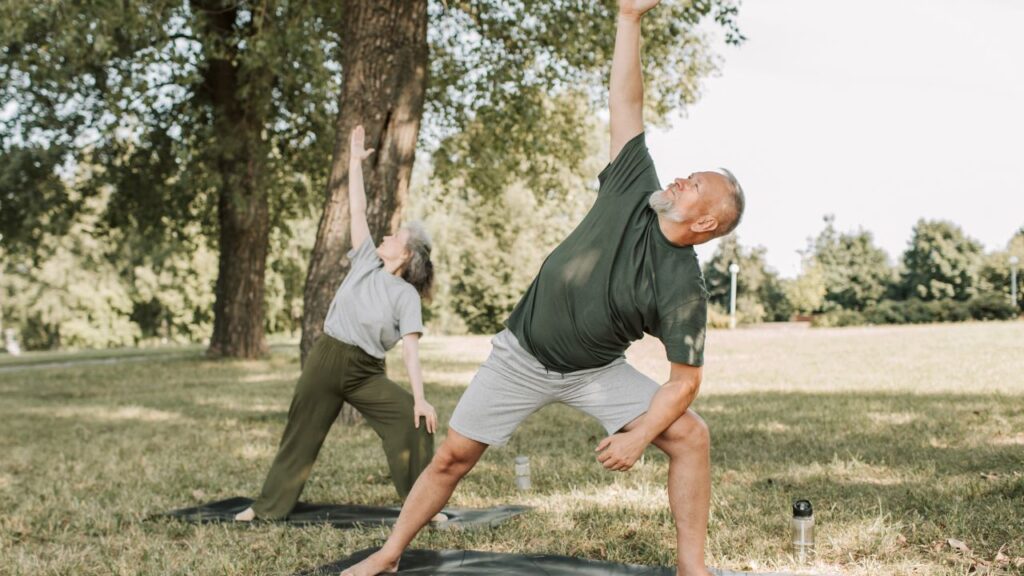
Many seniors avoid movement because they fear falling.
Ironically, avoiding movement often makes balance worse.
Regular mobility exercises help:
- Improve circulation
- Activate muscles
- Strengthen joints
- Enhance coordination
- Reduce stiffness
- Increase confidence
You do you need a expensive gym equipment to intense your workouts.
A sturdy chair, a little space, and ten minutes daily can make a remarkable difference.
Exercise 1: Deep Breathing for Relaxation & Stability 🌬️
Before beginning physical movement, it is important to calm the nervous system.
Sit upright in a firm chair with your feet flat on the floor.
Place one hand on your chest and slowly inhale through your nose.
Exhale gently through your mouth.
Try this breathing rhythm:
Inhale for 3 seconds, exhale for 5 seconds\text{Inhale for 3 seconds, exhale for 5 seconds}
This type of breathing activates the parasympathetic nervous system, which:
- Lowers stress
- Relaxes muscles
- Improves oxygen flow
- Helps movement feel smoother
Repeat for 3–5 slow breaths.
Exercise 2: Belly Breathing for Better Core Control 🫁
Place your hand on your stomach just below the navel.
As you inhale, allow your belly to gently rise outward.
This technique is called diaphragmatic breathing.
Many older adults unknowingly breathe shallowly from the chest, which increases tension throughout the body.
Belly breathing:
- Improves oxygen efficiency
- Relaxes the body
- Supports posture
- Helps stabilize the core muscles
Practice for several slow breathing cycles.
Exercise 3: Shoulder Rolls to Improve Posture 🪑
Poor posture significantly affects balance.
Sit tall and slowly raise your shoulders toward your ears.
Then gently roll them backward and downward.
Repeat 5 times.
This simple movement:
- Releases neck tension
- Opens the chest
- Improves spinal alignment
- Encourages upright posture
Good posture allows the balance system to function more efficiently.
Exercise 4: Gentle Neck Mobility Exercises 🔄
The neck contains important sensory information related to balance and body position.
Slowly tilt your head:
- Right ear toward right shoulder
- Left ear toward left shoulder
Hold briefly and return to center.
Then slowly rotate your head to look over each shoulder.
These movements:
- Reduce stiffness
- Improve mobility
- Enhance communication between the brain and body
Move slowly and never force the stretch.
Exercise 5: Shoulder Circles for Upper Body Mobility 💪
Relax your arms at your sides.
Make slow circles with your shoulders:
- Forward
- Up
- Back
- Down
Repeat 5 times in each direction.
This exercise helps release tight muscles caused by:
- Sitting
- Driving
- Poor posture
- Screen use
Improved shoulder mobility supports better upper-body alignment and stability.

Exercise 6: Chest Opening Stretch 🌟
Open your arms gently out to the sides.
Allow your chest to expand naturally while keeping your shoulders relaxed.
This movement counteracts the rounded posture many seniors develop over time.
Benefits include:
- Better breathing
- Improved posture
- Increased confidence while standing and walking
Repeat slowly several times.
Exercise 7: Arm your Raises for a Circulation & Strength
Raise both arms slowly overhead if comfortable.
Then lower them with control.
If shoulder pain exists, lift only as high as feels safe.
This exercise:
- Encourages blood circulation
- Activates shoulder muscles
- Improves flexibility
- Maintains upper-body strength
Controlled movement is more important than speed.
Exercise 8: Hand Grip Strength Training ✋
Grip strength is closely connected to independence and safety.
Make gentle fists and squeeze lightly.
Hold briefly, then release.
Repeat 10 times.
Strong hands help seniors:
- Hold railings safely
- Carry objects confidently
- Prevent accidental slips
Avoid squeezing too hard.
Exercise 9: Seated Marching for Hip Strength 🦵
While seated, slowly lift one knee at a time.
This movement strengthens:
- Hip flexors
- Thigh muscles
- Core stabilizers
Even small movements provide benefits.
Start with:
5 repetitions per leg5\ \text{repetitions per leg}
Gradually increase over time.
Exercise 10: Weight Shifting for Better Walking Balance ⚖️
Shift your body weight gently:
- Right side
- Left side
This movement trains the body to transfer weight properly during walking.
Balance improvements begin with teaching the body how to control weight distribution safely.
Hold the chair if necessary.
Exercise 11: Heel and Toe Pumps 👣
Lift your heels and toes alternately.
This movement activates:
- Calf muscles
- Shin muscles
- Ankle stabilizers
These muscles are essential for:
- Walking stability
- Preventing trips
- Shock absorption
Perform slowly and rhythmically.
Exercise 12: Leg Extensions for Fall Prevention 🪑
Straighten one leg fully in front of you.
Hold briefly, then lower slowly.
Repeat on the other side.
This strengthens the quadriceps — one of the most important muscle groups for:
- Standing up safely
- Climbing stairs
- Preventing falls
Controlled lowering builds strength effectively.
Exercise 13: Ankle Flexes for Mobility 🔄
Extend one leg and flex your foot:
- Pull toes toward the shin
- Point toes away
This improves ankle mobility and nerve communication between the feet and brain.
Healthy ankles are critical for maintaining balance.
Exercise 14: Sit-to-Stand Training 🧍♂️
This is one of the most powerful functional exercises for seniors.
Move to the edge of your chair.
Lean slightly forward and stand up slowly using your heels.
Then lower yourself back down with control.
The lowering phase is especially important because it builds strength.
This movement directly improves:
- Independence
- Leg strength
- Daily mobility
- Fall prevention
Exercise 15: Standing Weight Transfers 🚶
Stand behind a sturdy chair while holding the backrest.
Shift your weight fully:
- Onto the right foot
- Then onto the left foot
This teaches your body how to stabilize itself during movement.
Small ankle and hip muscles become more responsive with practice.
Tips for Safe Exercise at Home 🏡
Always remember these important safety tips:
Move Slowly
Fast movements increase instability.
Never Hold Your Breath
Steady breathing protects the heart and muscles.
Use Support When Needed
A sturdy chair provides security and confidence.
Modify When Necessary
Smaller movements are still effective.
Stop If Sharp Pain Occurs
Gentle discomfort is normal, but sharp pain is not.
Consistency matters more than intensity.
The Real Secret to Better Balance ✨
Balance is not just about muscles.
It is about confidence.
When seniors stop trusting their bodies, fear begins controlling movement. That fear often leads to reduced activity, weaker muscles, and even greater instability.
Daily movement interrupts that cycle.
Every small exercise:
- Rebuilds coordination
- Sharpens nerve pathways
- Strengthens muscles
- Restores confidence
The human body can adapt at almost any age when given the opportunity.